
Stress Rupture Test for High-Temperature Material Performance
What is Stress Rupture Test and Why is it Important?
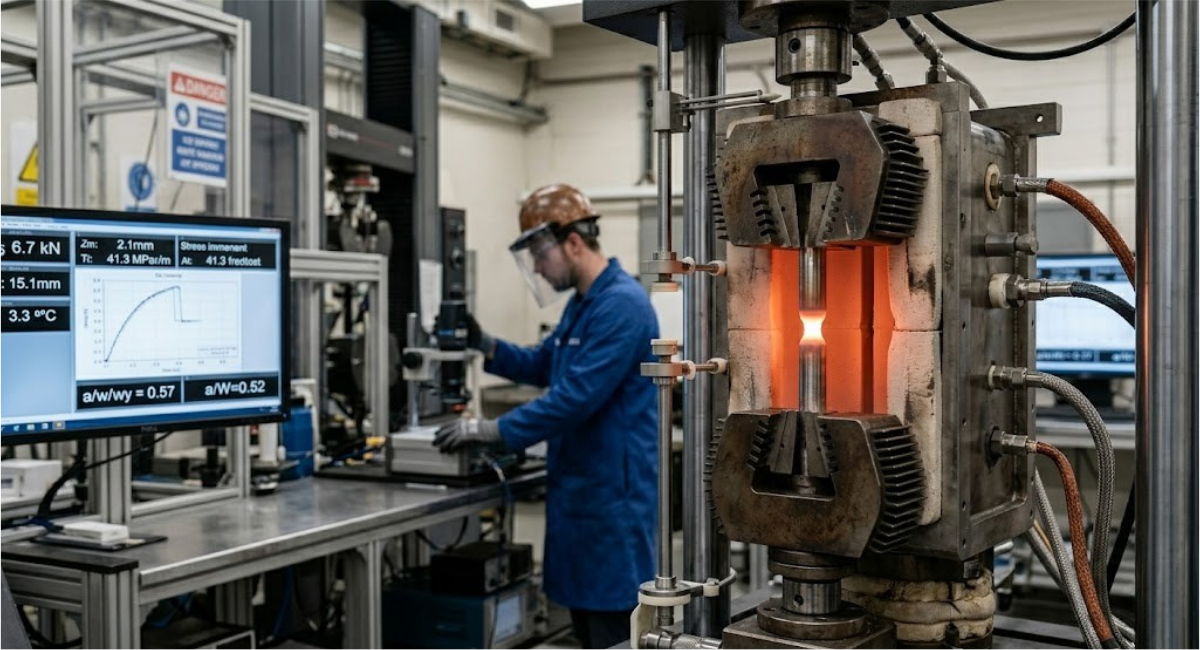
Stress rupture testing is, in simple terms, a way to see how long a material can hold up under constant pressure or load, especially when it’s hot. Unlike normal strength tests where you just pull or bend something and get a number, this one takes its time. Sometimes the test goes on for hours, sometimes even days, depending on what engineers need to know. It’s mostly used for metals and alloys in turbines, boilers, and other equipment that see high stress and heat over long periods.
Why bother with it? Well, because materials don’t always fail suddenly. They can weaken slowly, and if you’re not careful, that could lead to accidents or expensive breakdowns. A stress rupture test basically gives a sneak peek into how a material behaves over time. It’s like seeing into the future — at least a little — before the part actually goes into use.
Importance of Stress Rupture Test in High-Temperature Applications
When equipment runs at high temperature for long hours, the real problem is not immediate breaking. The real issue is slow damage. Metal parts inside boilers, turbines or heaters may look fine from outside, but internally they are under stress all the time. After months or years, that stress can cause rupture. This is exactly why stress rupture testing is important.
In simple terms, the test checks how long a material can actually survive under constant load and heat. Not just its strength for a few minutes — but its behavior over time. Many failures in high‑temperature systems don’t happen suddenly on day one. They happen slowly. Without this testing, companies are basically guessing the life of the component, and guessing in high‑temperature operations is risky.
Another thing is safety. If a high‑temperature pressure part fails, the damage can be serious. So engineers prefer to know the rupture life in advance. It helps in deciding inspection intervals, replacement timing, and even material selection. It may sound like just another lab test, but in real industrial conditions, it makes a big difference.
How Stress Rupture Test Ensures Material Safety and Longevity
In real industrial conditions, materials don’t just fail in one day. They slowly lose strength, especially when heat and load are constantly present. That’s where a stress rupture test becomes useful. Instead of checking only the immediate strength, this test observes how long the material can actually survive before breaking. It’s more about patience than force.
What makes it important is that high‑temperature components — like those in boilers or turbines — are expected to work for years. If a part weakens silently and no one knows its real life span, failure can come as a surprise. Stress rupture data gives engineers something solid to rely on. Not assumptions. Actual time‑based performance results.
It also helps in planning. Once the rupture life is known, maintenance teams can decide when inspection or replacement is needed. That increases safety and avoids sudden shutdowns. So in a practical sense, this test supports both longevity and reliability. It may look like just another lab procedure, but in long‑term operations, it plays a quiet but serious role.
Factors Affecting Stress Rupture Behavior of Materials
Stress rupture behavior mainly depends on temperature and load. If temperature goes up, rupture life usually goes down. That’s the simple reality. Even a small rise in operating heat can reduce the life of a metal part faster than expected. Same with stress — higher constant load means earlier failure. No surprise there.
Material type also makes a difference. Not all alloys behave the same way. Grain structure, heat treatment condition, and chemical composition all influence how long the material can resist creep and rupture. Sometimes two materials look similar in strength at room temperature, but at high temperature their rupture life is very different.
There are other practical factors too. Surface defects, welding zones, internal inclusions, even manufacturing history. A tiny crack or residual stress from fabrication can reduce long‑term performance. In real applications, rupture behavior is never controlled by one single factor. It’s usually a combination, and that’s why testing becomes necessary instead of just theoretical calculation.
Standards Followed for Stress Rupture Testing (ASTM / ISO):
Stress rupture testing is tricky. You can’t just heat a metal and see when it breaks. Labs follow certain standards, mostly ASTM and ISO. These standards tell you how to make samples, how to load them, what temperatures to use, and for how long. Without these, results can be all over the place. Every lab might get different numbers for the same material.
ASTM E139 is one of the most common for metals. It’s not complicated but has a lot of rules. Sample shape, grips, how long to run the test, and even how to record the data. Engineers follow it closely because one mistake and the time-to-rupture number could be useless. Also, repeating the test a few times is important. Sometimes one sample fails early, another lasts too long. The standard helps smooth that out.
ISO 204 and other ISO standards are similar, but more for international consistency. If a turbine blade is tested in India or Germany, ISO makes sure the test methods are the same. Otherwise, comparing results is pointless. This matters a lot for companies selling parts globally.
Following these standards is not just paperwork. It’s practical. Engineers use the data to plan inspections, maintenance, and replacements. Helps pick the right material too. High-temperature parts can fail silently, so knowing the real rupture life prevents surprises. It’s a quiet, but crucial step for safety and durability
Applications of Stress Rupture Test in Aerospace, Power, and Industrial Equipment
Stress rupture testing is kind of a behind-the-scenes thing, but it really matters. Take airplanes for example. Turbine blades get extremely hot. Metal looks fine, but tiny cracks can grow slowly. These tests help engineers see which metals survive longer. Not perfect, but better than guessing.
In power plants, boilers and turbines run under constant pressure and heat. Metals weaken over time. Without testing, nobody really knows when parts fail. That’s dangerous. Stress rupture tests give a rough idea of life span and help schedule maintenance. Keeps things from breaking suddenly.
Industrial machines are the same — reactors, pressure vessels, heat exchangers. Parts are stressed for months, sometimes years. Testing shows which materials are safe. Sometimes tiny flaws show up only under this test. Helps avoid overbuilding too.
Basically, stress rupture tests are a quiet safety check. You don’t see them, but planes, turbines, machines all rely on it. Without them, materials fail silently. That’s when problems get messy. Engineers may call it routine, but it really keeps things running.
Advanced Testing Facilities for Stress Rupture Evaluation
Stress rupture tests are not simple. You need labs with high-temp furnaces, grips that hold the metal, machines that keep load for hours, sometimes days. Not every lab can do this. Even small mistakes in temp or load can mess results.
Some labs have automated data recording. Others check stuff manually. The idea is to see how metal or alloys behave under long stress. Tiny cracks can appear slowly. Short tests don’t show everything. Labs also sometimes test different metals together. Like alloys, composites. Helps engineers compare which lasts longer. Useful in planes, turbines, reactors. Picking the wrong material can cost money and be dangerous.
At the end, these facilities make testing reliable. Without them, the numbers are useless. Engineers use results to plan maintenance, replacements, or redesign. Seems routine, but really it keeps stuff from breaking unexpectedly.
Ensure Your Materials Perform Safely
Share your requirement today and get expert guidance on the right test plan for your materials.

