
HIC Test: Protecting Metals from Hydrogen-Induced Cracking
What is HIC Test and Why It’s Essential
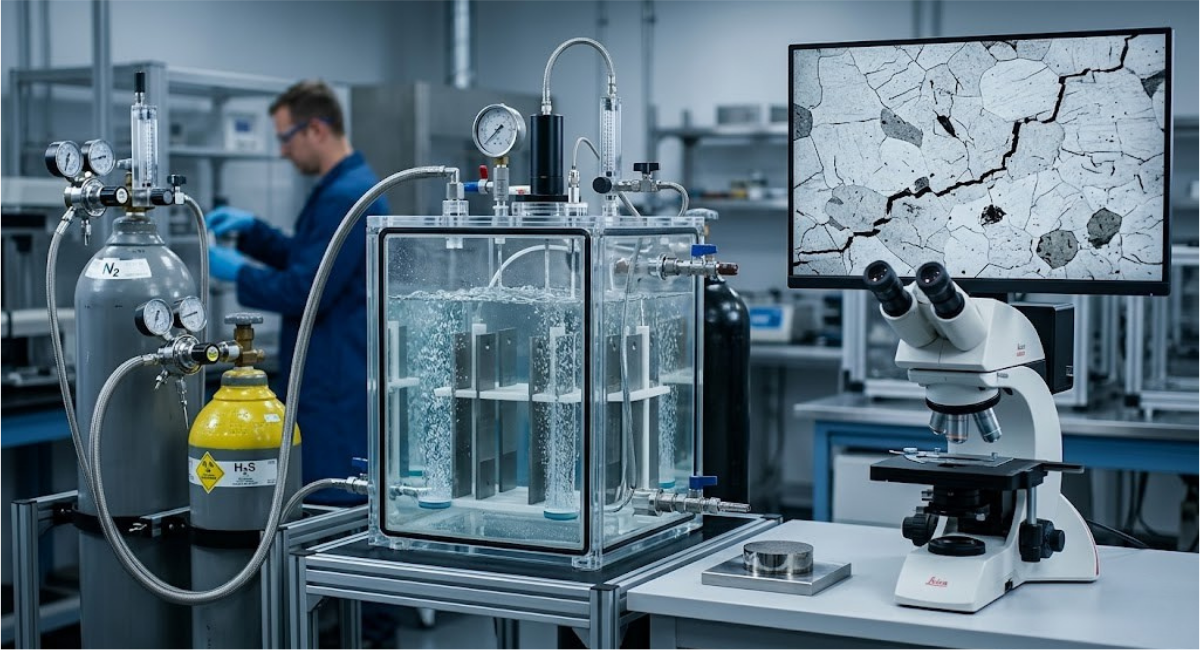
HIC test, short for Hydrogen Induced Cracking, basically checks how susceptible your steel plates or welds are to cracking from hydrogen pickup in sour environments like oilfields with H2S gas. You take unstressed samples, dunk them in acidified brine saturated with H2S at room temp for 96 hours, then slice and scope them for internal cracks – no outside load needed since the hydrogen atoms diffuse in, recombine at inclusions, and build pressure till steps or blisters form. It's all per NACE TM0284, calculating CLR, CTR, and CSR ratios to grade if your material passes for wet H2S service or needs normalizing to clean up the mid-thickness junk.
Running this test is non-negotiable for pipelines, pressure vessels, or refineries handling sour crude because unchecked HIC turns hairline fissures into leaks or ruptures years later under operating pressure. Think Deepwater Horizon vibes – hydrogen from corrosion sneaks into non-metallic spots, stacks up, and pops the matrix without warning, especially in higher-strength C-Mn steels. Skipping it means rejecting good plate unnecessarily or greenlighting lemons that fail RBI scans down the line.
Labs etch the cross-sections, measure crack lengths under microscopes, and spit out reports showing if CSR stays under 2% for safe quals – low numbers mean your X65 or L80 holds up in shale plays or LNG trains. It guides steelmakers on Ca treatment or rolling tweaks to shrink centerline segregation, saving you from post-weld headaches. Bottom line, HIC testing keeps sour service gear reliable without over-speccing to pricey alternatives.
Importance in preventing pipeline, pressure vessel, and structural failures
HIC testing plays a huge role in keeping pipelines from splitting open in sour gas fields, where hydrogen sneaks into the steel from H2S corrosion and builds up invisible cracks over time. Without it, you'd ship plate that looks fine on tensile tests but blisters internally at mid-thickness, leading to stepwise cracks that grow under hoop stress till the line ruptures – think major leaks during frac ops or transport. It flags bad batches early, so operators spec cleaner steels with low segregation for sour service lines like X60 or L80 casings.
For pressure vessels in refineries or upgraders, HIC checks stop those delayed failures where hydrogen pressure pops the matrix around MnS inclusions, turning a hydrotreater shell into shrapnel without warning. You etch the samples post-soak, measure CLR and CSR, and reject anything over limits – that data feeds into your RBI plans, spacing inspections right to catch growth before it hits critical size. It's saved countless vessels from PWHT overkill or field swaps.
Structural stuff like offshore platforms or sour towers lean on it too – HIC-prone welds or plates fail brittle under tension or fatigue, but passing tests let you run thinner walls confidently, cutting fab costs. Regs from NACE or API won't clear sour wet gear without those numbers, dodging downtime and spill cleanups that hit millions. Bottom line, it turns risky steel into proven performers for decades of hard use.
Trusted Laboratory for Accurate HIC Testing
When you're chasing accurate HIC testing, TCR Engineering in Mumbai tops the list – NABL accredited with 50 years under their belt, nailing NACE TM0284 on everything from linepipe to vessel plate without missing a beat. They soak your samples in that nasty H2S brine, slice 'em precise, and etch under scopes to measure CLR/CTR/CSR down to the last percent, spitting out reports Aramco or PDO would rubber-stamp. Rush jobs? They've got multiple chambers running shifts to match your shutdown windows.
What edges them out is the full sour service suite – pair HIC with SSC or SOHIC right there, plus fitness-for-service calcs that tell you if your batch stays leak-tight for 25 years. No generic numbers; they tweak protocols for your exact pH, H2S partials, or alloy quirks, and being local means no import hassles or sky-high shipping for Indian projects. Their gear mirrors field conditions dead-on, dodging false passes that bite later.
Element Materials or Rio GmbH work great overseas if you're in the Gulf or Europe, but for speed, cost, and local know-how, TCR's your bet – they've qual'd steel for half the refineries around here. Send a sample, get data you can bank on for quals or claims, no drama.
Highlight experience, certifications, and advanced testing facilities
TCR's been knee-deep in corrosion work for 50+ years now, qualifying steel for sour jobs from basic linepipe to finicky L90 casings – they've seen it all and learned from field busts like those early Aramco rejects. Guys there tweak tests based on what actually fails downstream, so you get results that match real pH swings or H2S spikes, not just textbook soaks. It's that battle-tested eye which turns iffy plates into sure bets.
On certs, they've got NABL ISO 17025 locked in, NACE lab index for all the biggies like TM0284 HIC and TM0177 SSC – passes audits clean every time with no findings. Techs carry personal NACE Level 3 tickets too, so you're not dealing with rookies on lead roles. Those stamps mean your reports fly through DNV or Shell quals without pushback.
Setup's no slouch either – multiple H2S tanks humming 24/7 with auto pH and gas feeds for 50 samples a pop, then straight to microscopes with digital crack mapping down to 10 microns. On-site machining keeps flats perfect, and they crunch CSR numbers through homegrown software tied to RBI tools. No fuss, just solid data quick.
Step-by-Step Hydrogen Induced Cracking Testing Process
HIC testing kicks off by cutting your steel samples – usually 100mm long, 20mm wide, 5-30mm thick flats from pipe or plate, no stress applied since it's all about internal hydrogen damage. You clean 'em up, check for burrs, then rack them in a sealed chamber with minimal contact, pouring in Solution A (that acidic NaCl-H2S brine) or B (seawater mimic), both bubbled constantly with H2S gas at room temp, 1 bar, for exactly 96 hours. Techs log pH start and end, keep gas flowing steady at 1-5 ppm, no interruptions – it's a soak that lets hydrogen diffuse right into inclusions.
Once time's up, pull the specimens, rinse, and let 'em sit 24 hours to stabilize before sectioning into three planes – top, mid, bottom – about 3mm apart. Polish those faces flat, etch with Nital to pop the cracks under a scope, then trace every fissure, blister, or step with a micrometer or image software. You measure crack lengths across the width, thicknesses through, and stack 'em up for ratios – CLR for how wide they spread, CTR for depth, CSR for overall sensitivity.
Final step crunches the numbers per NACE TM0284: CLR under 15%, CTR is less than 5%, CSR is less than 2% usually passes for sour quals. Report spells out pass / fail with photos, tying back to your heat or position in the plate. Labs like TCR knock this out in a week, samples to stamped cert, ready for mill release or vendor quals.
Ensure Your Materials Perform Safely
Share your requirement today and get expert guidance on the right test plan for your materials.

